Shrimp and Chive Potsticker Dumplings
 This year seems to be a banner year for cookbooks and there are so many that I’ve leafed through and bookmarked, that even though it’s early in the cookbook season, I feel like I already have the next twelve month’s worth of great recipes to try on my docket. Lately I’ve been impressed by books that make cuisines that people might feel daunted about tackling, accessible. And even though the internet has made finding international ingredients easier, I’m drawn to books and recipes that don’t make you feel like an idiot if you don’t have colatura, or can’t find rascasse at your local fish market for your bouillabaisse. (Or don’t feel like wrestling with a live eel to make it.) Authenticity is nice to aspire to, but I’m also happy cooking something with ingredients that I can find locally.
Bouillabaisse was a dish made by fishmongers in Marseilles who used leftover scraps of fish, what they couldn’t sell, to make the soup. It was never intended to be a luxury dinner made with pricey imported seafood. So the esprit of the dish is to use what’s available in your locale. Ditto with cassoulet, which was a nourishing, peasant meal made with dried beans and bits of leftover and preserved meats. Using beans that cost $30 per pound somewhat negates the concept of cassoulet.
Food changes and evolves, especially in America, a land of immigrants, where new combinations are tested when some ingredients aren’t available, and cooks and chefs make changes based on the seasons and regions. In one excellent new cookbook I’ve been reading, Zahav, chef Michael Solomonov talks about how in the winter, rather than using bland tomatoes for tabbouleh, he uses persimmons. It is more authentic to make tabbouleh with tasteless, out-of-season tomatoes? Or to use something fresh, delicious, and available, which is the spirit of the original dish? He argues for the latter, which makes sense to me.
Most of us in America grew up with some form of “Americanized” versions of Chinese food. So the esprit of the dishes isn’t a strict adherence to a list of ingredients, but making do with whatever you have. That’s how Thai, Italian, and French food evolved, even in their own countries. And if you don’t believe me, ask our Italian neighbors in France where pistou and macarons came from.
Perhaps because I’m from America where immigrants brought most of our food from somewhere else, origins are not something that I feel like is worth quibbling over, or rigidly defending authenticity, because it doesn’t seem to matter to me at this point. I just care that food is good, made with good intentions, and fresh. Michael Solomonov, Daniel Boulud, Eddie Huang, David Chang, Alice Waters, Dominique Ansel, and Yotam Ottolenghi have shown that foods steeped in long-standing traditions from certain countries cultures can be updated for today’s tastes, successfully using ingredients that are available in other parts of the world.
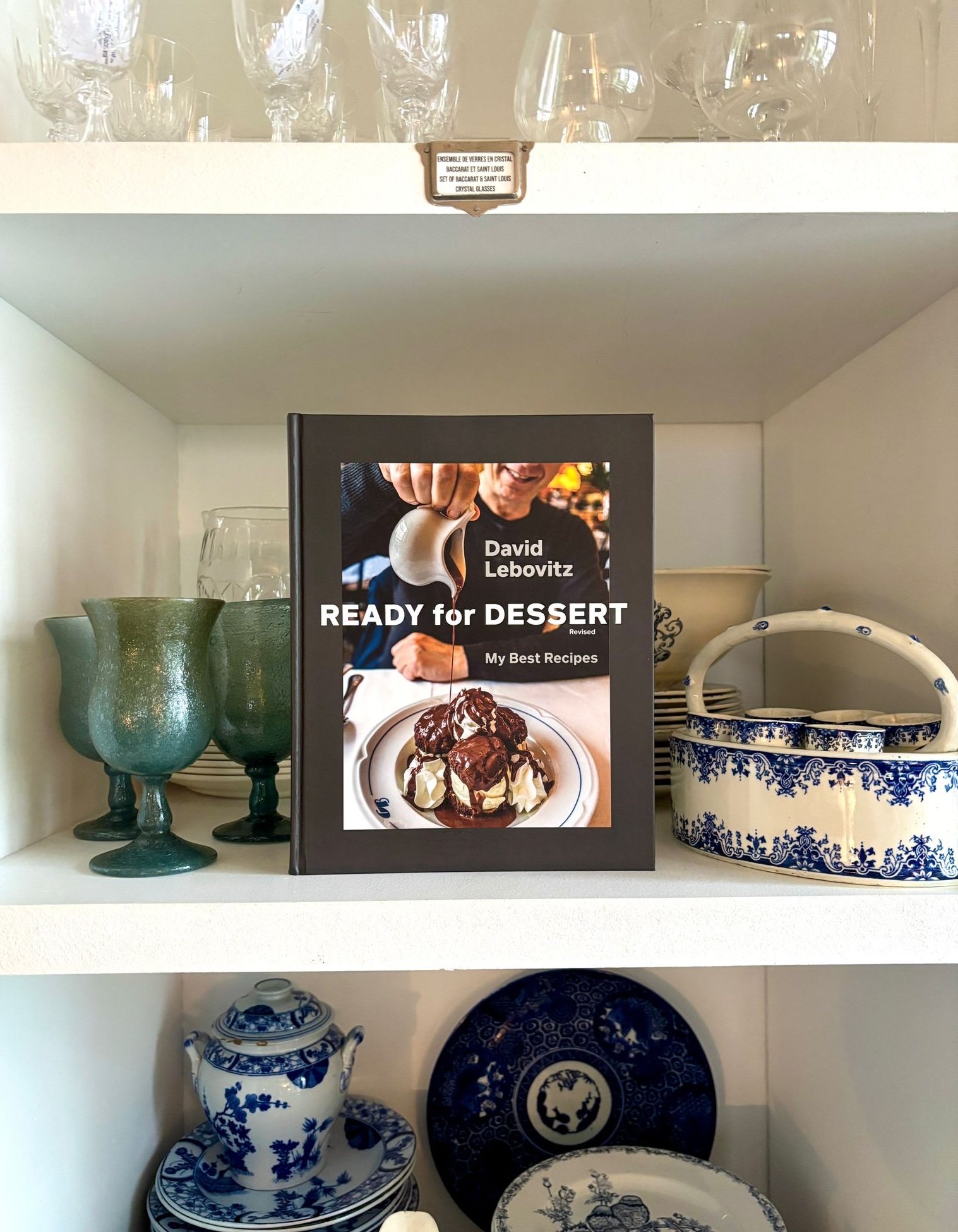
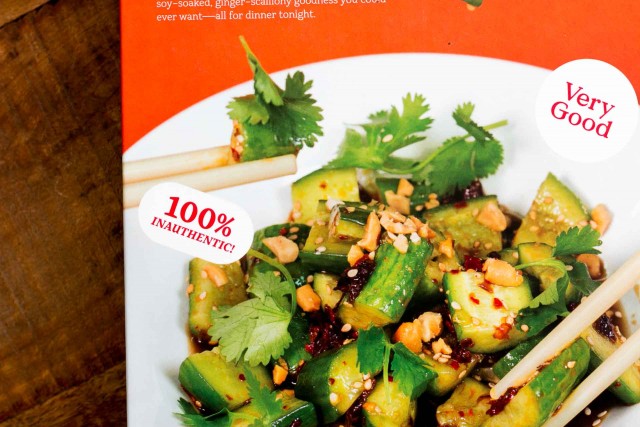
That said, to be honest, I was a little skeptical when I got Lucky Peach Presents 101 Easy Asian Favorites, somewhat because of the “pop” design that is intended to look like a 1960’s American Chinese cookbook, the kind that had recipes for rumaki and pu pu platters, accompanied by pictures of backyard tiki parties. I think all those things are fun, but I worked in an excellent, and – yup – authentic Chinese and Southeast Asian restaurant for a few years, and wasn’t sure I needed a book of recipes that are self-described as 100% inauthentic.
But as I leafed through the book, I was completely won over by it. I liked how it makes Asian cooking fun and accessible. Every recipe in the book would be easy for anyone to make. Sure, if you want to tackle the great dishes of China, you can find books that will help you do that. (And then spend a few days gathering all the ingredients.) But if you just want to make a batch of dumplings, and feel like a pro with a lot less effort, or roast off a batch of sticky ribs with fish sauce, this book will help you to do that. Cooking is supposed to be fun, and tackling a project like making homemade dumplings will make you feel like you’ve really accomplished something. I know, because I’ve done it.
101 Easy Asian Favorites is a book that anyone could make any recipe from. That’s something I want in a cookbook. (Although there’s certainly room for all types of cookbooks, from ones that capture authentic foods and their fascinating lineage, to reference books that I use for understanding the technical aspects of cooking and baking.) But I find myself being less-drawn to “aspirational” cookbooks that keep you at a distance from your kitchen, rather than cookbooks that are actually useful, and get you cooking. Or in the case of these dumplings – folding and pinching.
Called potstickers in America (and Jiaozi in Chinese), these kinds of dumplings are said to be the result of a happy accident when someone was frying up a batch of dumplings and some water unintentionally got spilled into the pan they were cooking in. The dumplings “stuck” to the pan, giving them a crisp crust on the bottom. I love dumplings and they are one of the foods that I could eat for breakfast, lunch, and, dinner. And then as a midnight snack.
These are very easy to make, with a short list of ingredients. It might take you a few tries to get the dumpling folds right, but once fried up and dipped in sauce, you’ll feel confident sitting down to a plate of steaming hot homemade dumplings, no matter when you want to eat them.
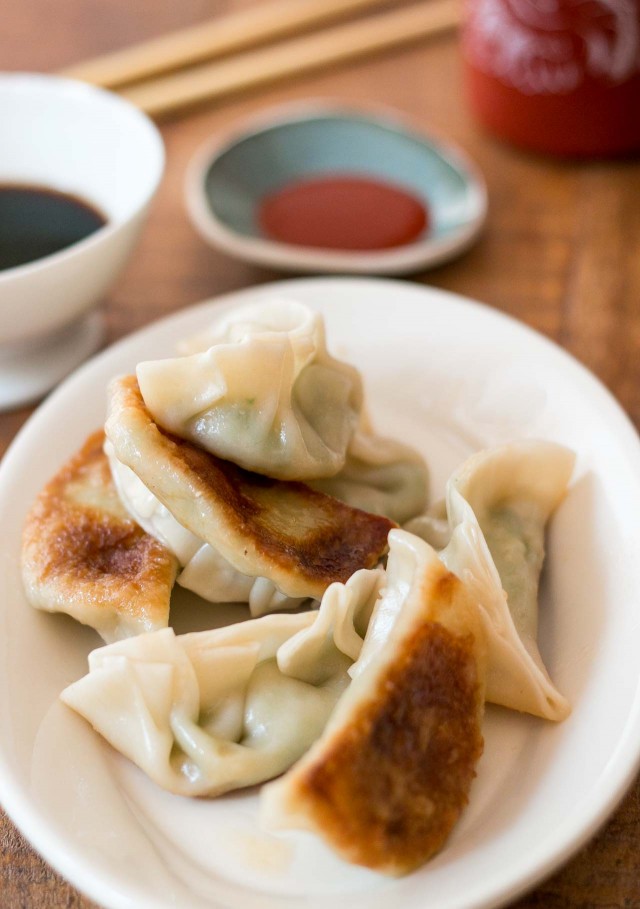
Shrimp and Chive Potstickers
For the dumplings
- 1 pound (450g) uncooked shelled shrimp, fresh or frozen (if frozen, thawed)
- 1 cup finely minced garlic chives or 2 bunches regular chives, minced
- 1 tablespoon peeled, minced ginger
- 1 large egg, lightly beaten
- 1 tablespoon soy sauce
- 1 tablespoon Shaoxing wine or sherry
- 1/2 teaspoon sesame oil
- 1/2 teaspoon white or black pepper
- 1/2 teaspoon salt
- Two 1-pound (450g) packages of dumpling wrappers
Dipping Sauce
- 3 tablespoons soy sauce
- 1 teaspoon rice vinegar
- 1 teaspoon sugar
- 2 tablespoons water
- a few drops of sesame oil
- To make the dumplings, peel and chop the shrimp, either with a chef’s knife or pulsing them in a food processor. In a medium-sized bowl, mix the chopped shrimp with the chives, ginger, egg, soy sauce, Shaoxing, sesame oil, pepper, and salt. Cover and chill the mixture for at least 30 minutes.
- While the filling is resting, make the dipping sauce by stirring together the soy sauce, vinegar, sugar, water, and sesame oil until the sugar is dissolved.
- To stuff the dumplings, have a small glass of water with a brush ready. Dust a baking sheet lightly with corn starch. (I line the baking sheet with parchment as well for extra insurance.)
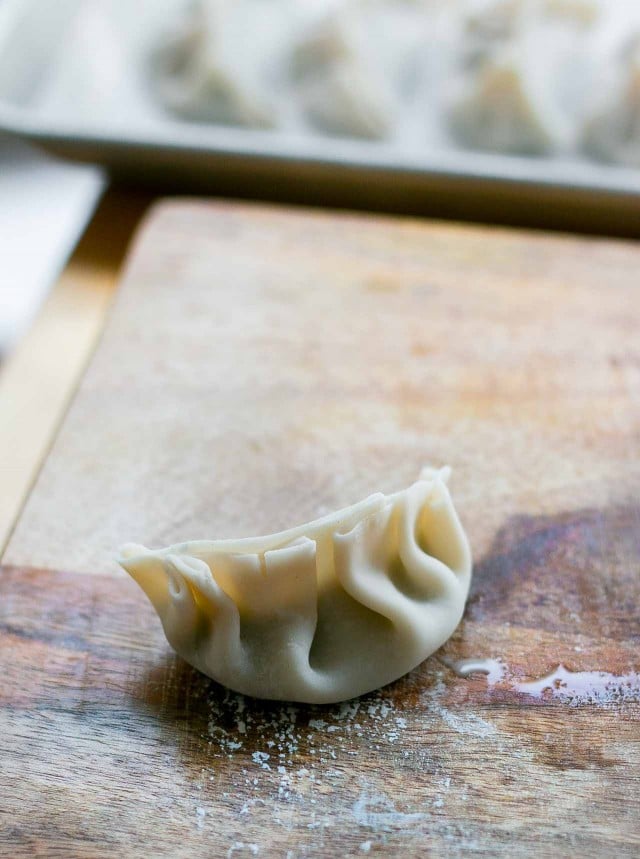
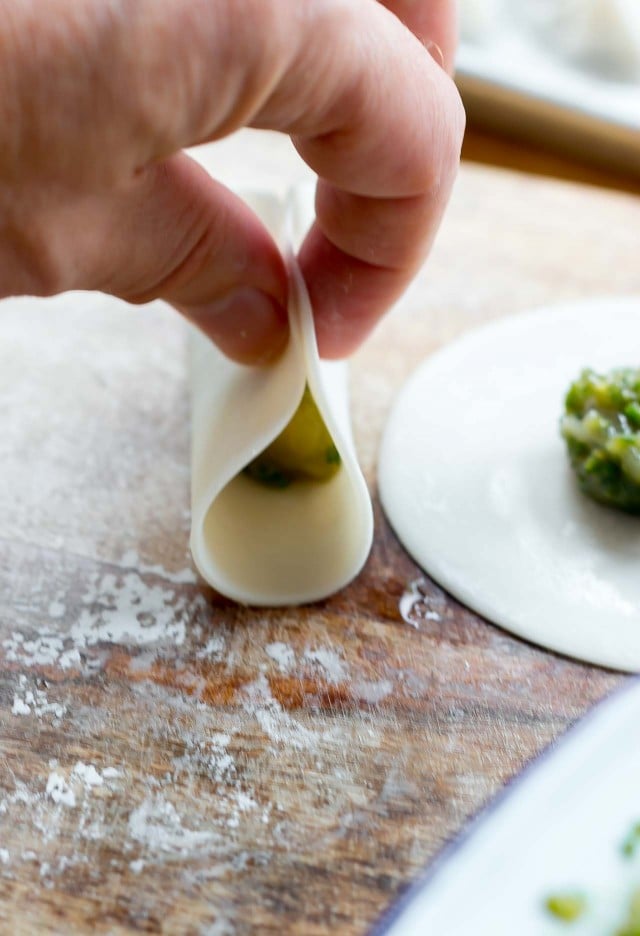
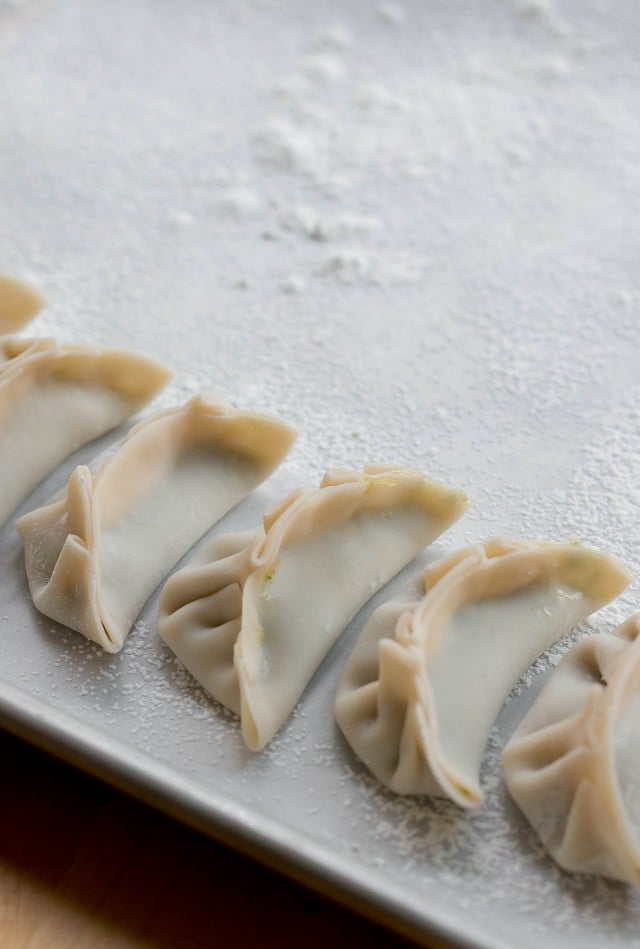
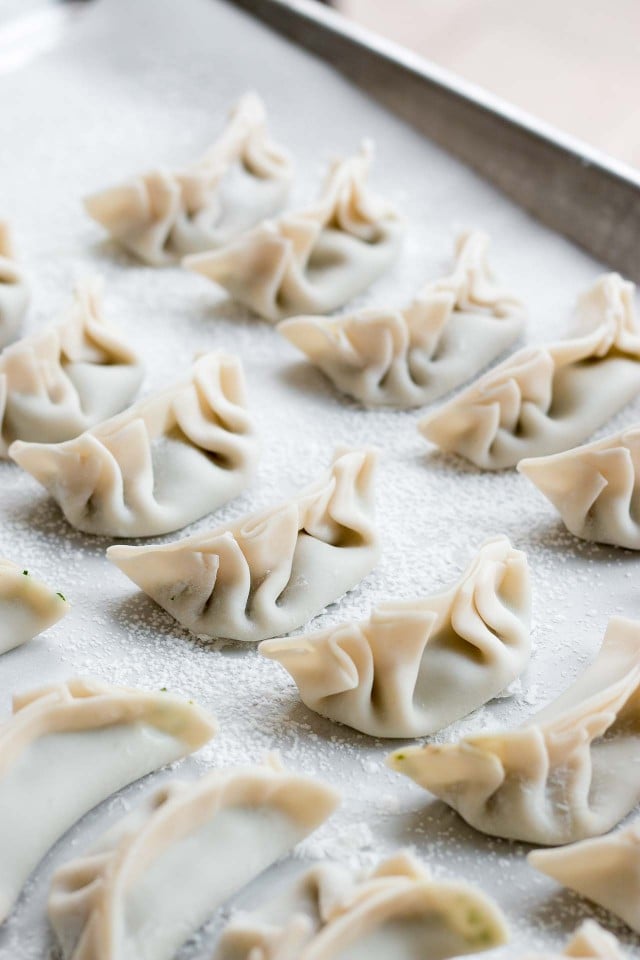
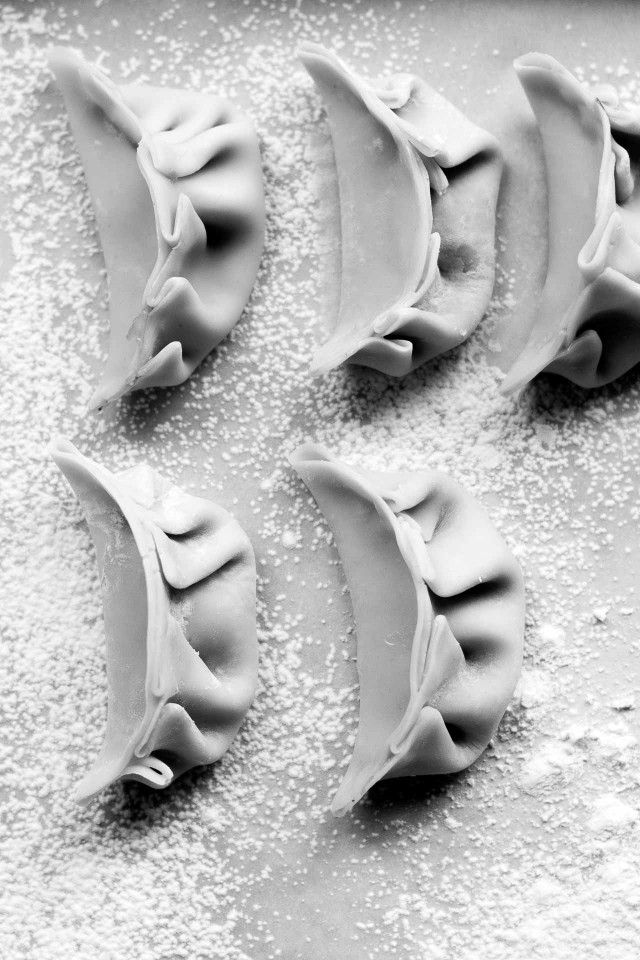
- Brush a circle of water around the outer rim of a dumpling wrapper with water. Place a generous teaspoon or so of filling in the middle, then fold the opposite edges of the dough over the filling, and pinch it together in the center. (As shown in the photo, in the post.) Working with your fingers, pleat the edges of the dough to enclose the filling, making sure to expel as much air as possible from the inside before closing them up, and making sure there are no gaps, so the dumplings are completely sealed shut.
- Place the dumpling flat side down on the corn starch dusted baking sheet, and fill the rest of the dumplings the same way.
- To cook, add enough neutral-flavored cooking oil in a skillet (one which has a cover) until it coats the bottom of the pan. You can use a non-stick skillet, a wok, or a cast iron one. Heat the oil over medium-high heat until it is hot and sizzling.
- Add enough dumplings to the pan, flat side down, cooking as many as will fit in the pan, but they should not be touching. (You will likely have to fry the dumplings in batches, depending on the size of your pan.) Fry for 1 minute, until the dumplings are browned on the bottom. Add ¼ cup (60ml) of water to the pan, then quickly cover. Let the dumplings cook until the dumplings are cooked through, about 3 minutes. To check for doneness, the dough should become translucent in all places.
- Remove the lid and cook until the water is boiled off and the dumplings are browned and crisp on the bottom.
- Serve the dumplings warm with dipping sauce and hot sauce, such as chili oil, if desired.
Notes
Related Recipes
Thai Stir-Fried Chicken with Chile Jam